EUt+: Building the European University of Technology. Timothée Toury on the challenge ahead
Connecting education, research, and student and faculty mobility to experience Europe as a common ground for learning and collaboration. The Secretary General of the Alliance—which involves nine continental universities—is in Cassino for the EUt+ Week and shares the vision of an integrated university model
As the debate on the European Universities Alliances initiative becomes increasingly central to EU agendas, the European University of Technology (EUt+), the alliance the University of Cassino has been a member of since 2023, is working to build a deeply integrated European university, moving beyond the basic concept of network or pilot project.
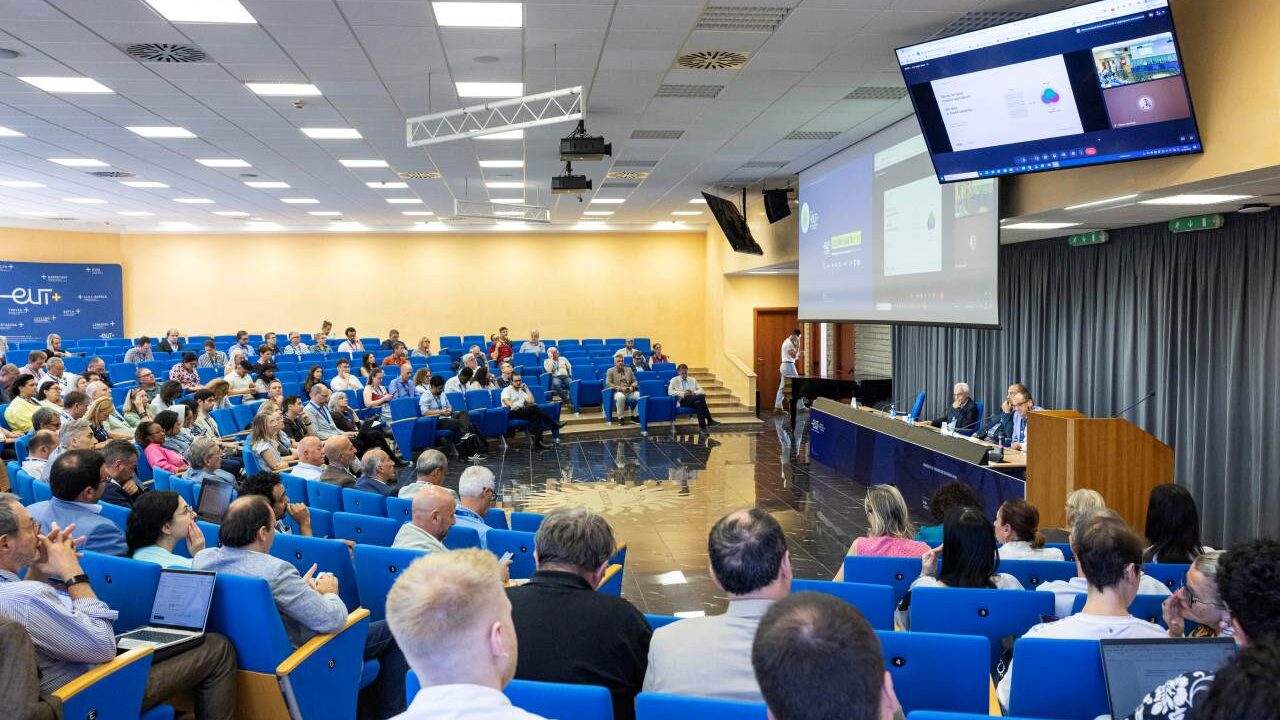
EUt Week 2026 a Cassino, una plenaria in Aula magna
Beyond the Network
European Plurinational Degree, Common Affiliation, European Research Institutes, Entrepreneurship School: these are just a few of the topics on the EUt+ agenda that encompass every dimension of the university and reflect the structural transformation led by the alliance within the European Higher Education Area.
The Metamorphosis of EUt+
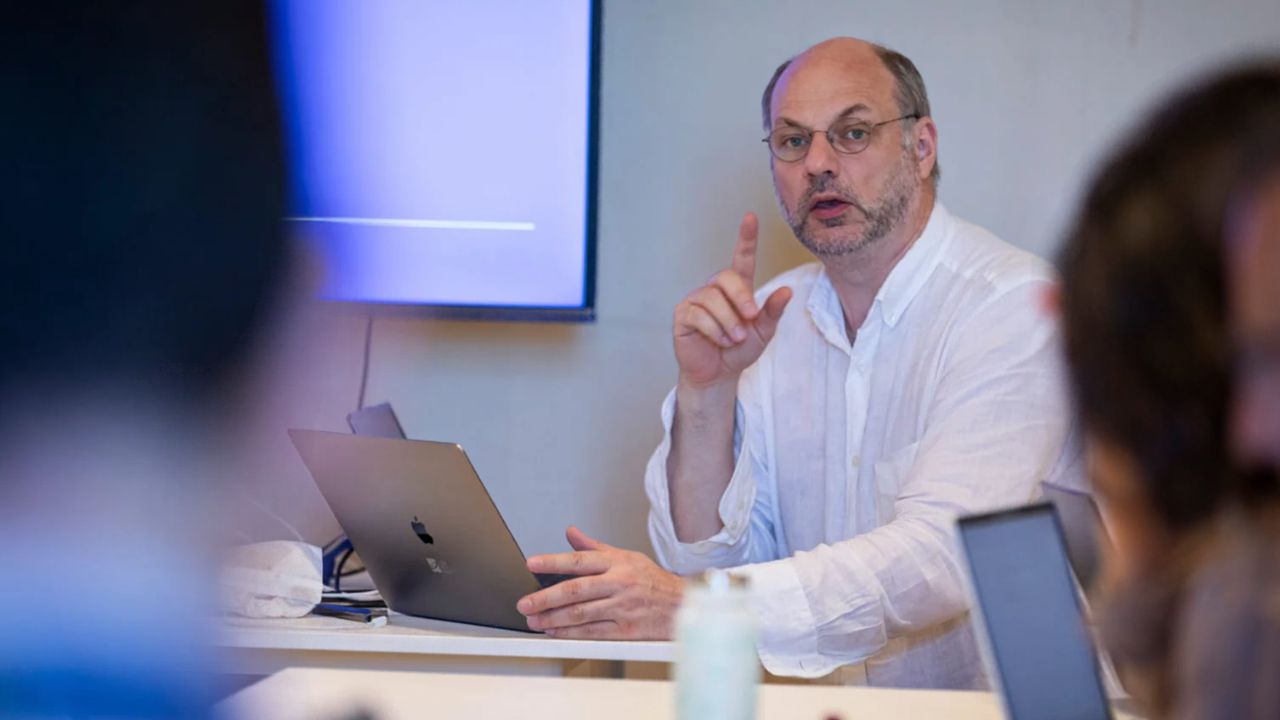
In order to understand this transformation and explore the opportunities EUt+ offers, UnicasPiù magazine interviewed Timothée Toury, Secretary General of EUt+ and a key figure in the alliance’s architecture, who was in Cassino to attend both the EUt+ Week, which brought together representatives from the nine member universities, and the events organized by Unicas for the European Researchers’ Night.
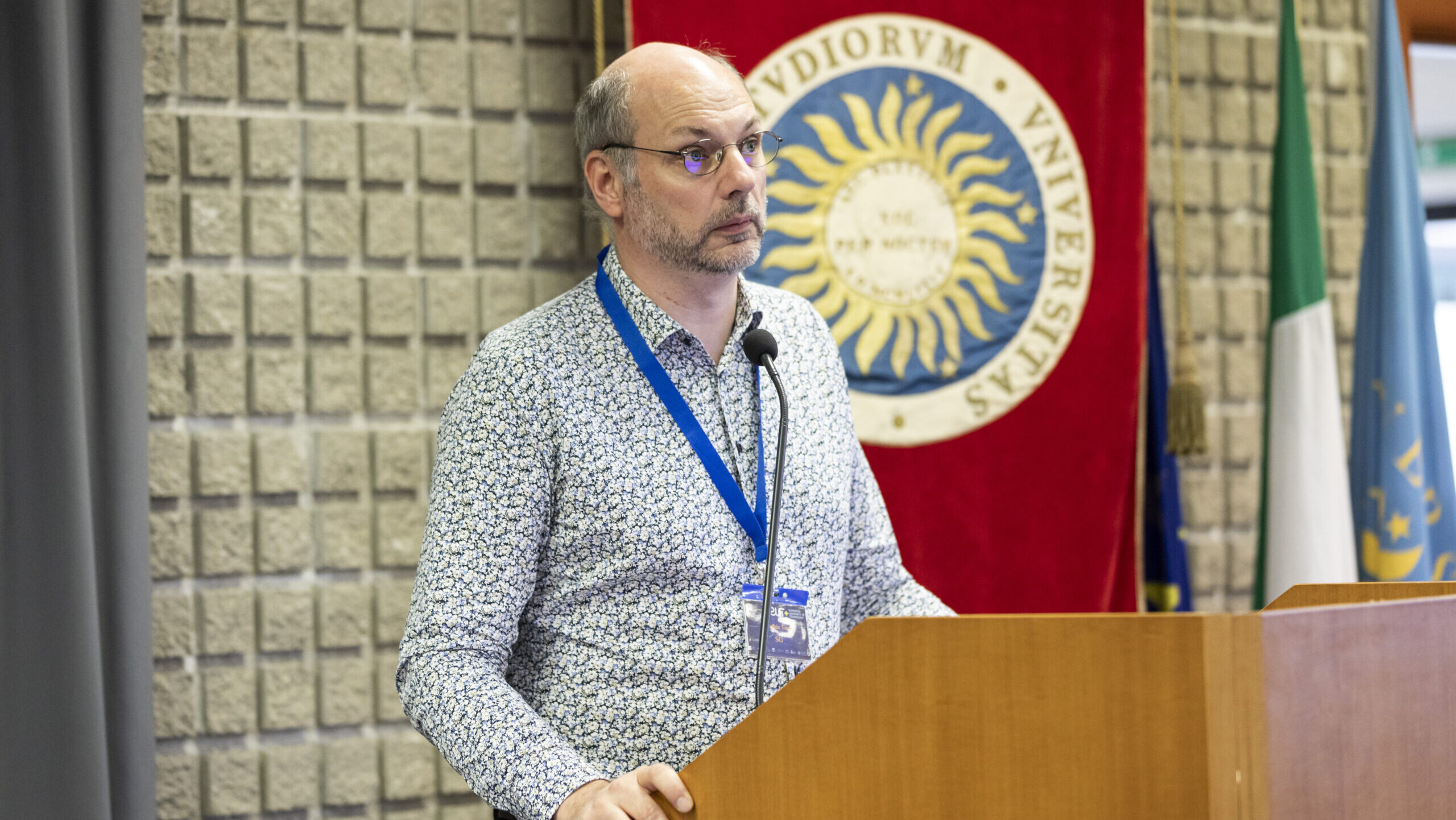
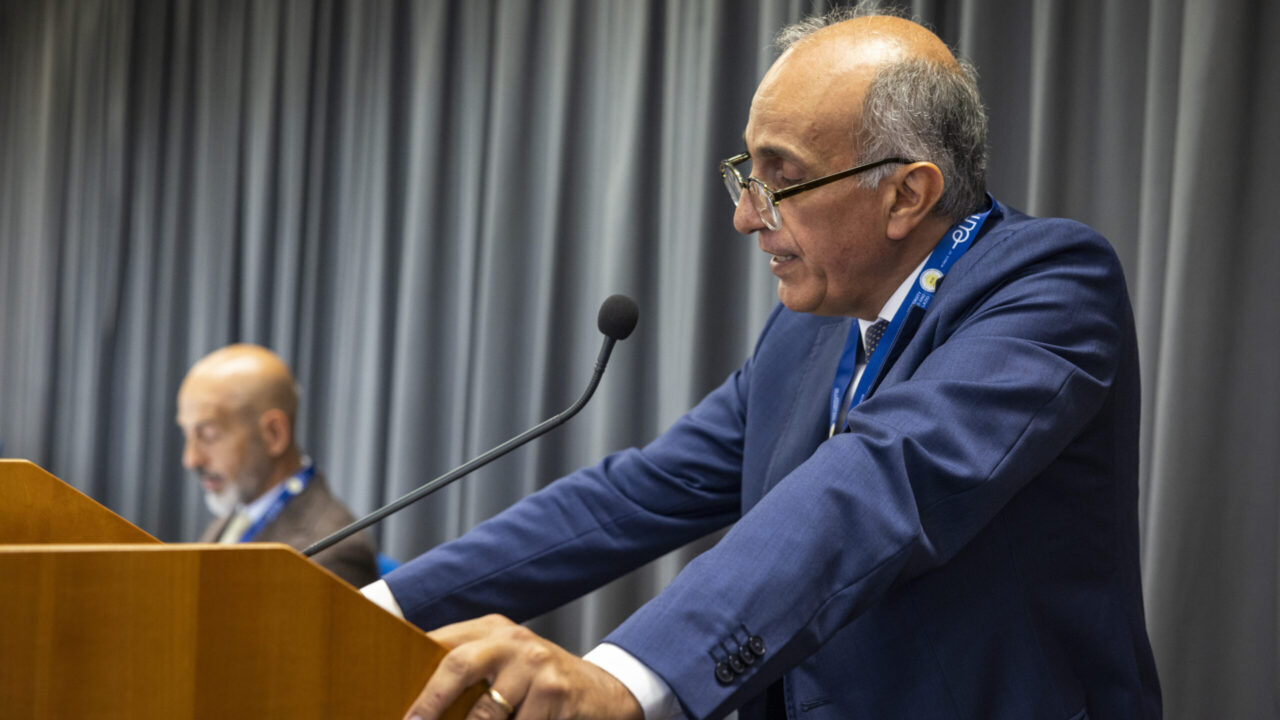
Timothée Toury nell’Aula magna di Unicas
As a leading authority, his perspective highlights the relevance of the issues driving the development of the European University of Technology, guided by a motto with an unmistakable meaning: “Think Human First”.
How was the idea of a European University of Technology conceived, and what sets it apart within the landscape of the European Commission’s European Universities Alliances initiative?
Our universities were already doing their job well: in education, in research, and in preparing graduates who find their place successfully in society and the labour market. We are strong institutions, sometimes very strong ones, but we do not necessarily have the size, centuries-old reputation or metropolitan weight that automatically gives an institution a strategic position. So the question was: at what scale should we build our future?
For many of our members, the European scale made more sense than simply becoming part of a larger national consolidation. Europe gave us the possibility not merely to become bigger, but to build something different: something that could challenge each of us while preserving what makes each institution valuable.
That is where EUt+ began. And each university joined for somewhat different reasons, which is important: this was never nine identical institutions following an identical strategy. What distinguishes EUt+ is the level of ambition we accepted from the outset. Most European University alliances understandably chose to build increasingly integrated networks. In our mission statement, we went further: the long-term horizon is an “eventual merger” into a European University of Technology.
This is not a deadline, nor a prediction of what the institution will look like twenty years from now. It is a direction. An Everest perhaps, or the Moon. But humanity did eventually reach both. The important point is that such an objective changes the questions you ask every day. If you genuinely intend to build a university together, then academic recognition, quality assurance, research structures, mobility, governance or digital systems can no longer be treated as isolated cooperation projects. They gradually have to work as parts of the same institution. What initially appeared extremely radical is also increasingly understood at European level as a serious response to a serious question: if Europe wants universities capable of acting at European scale, at some point some of us have to try building them.
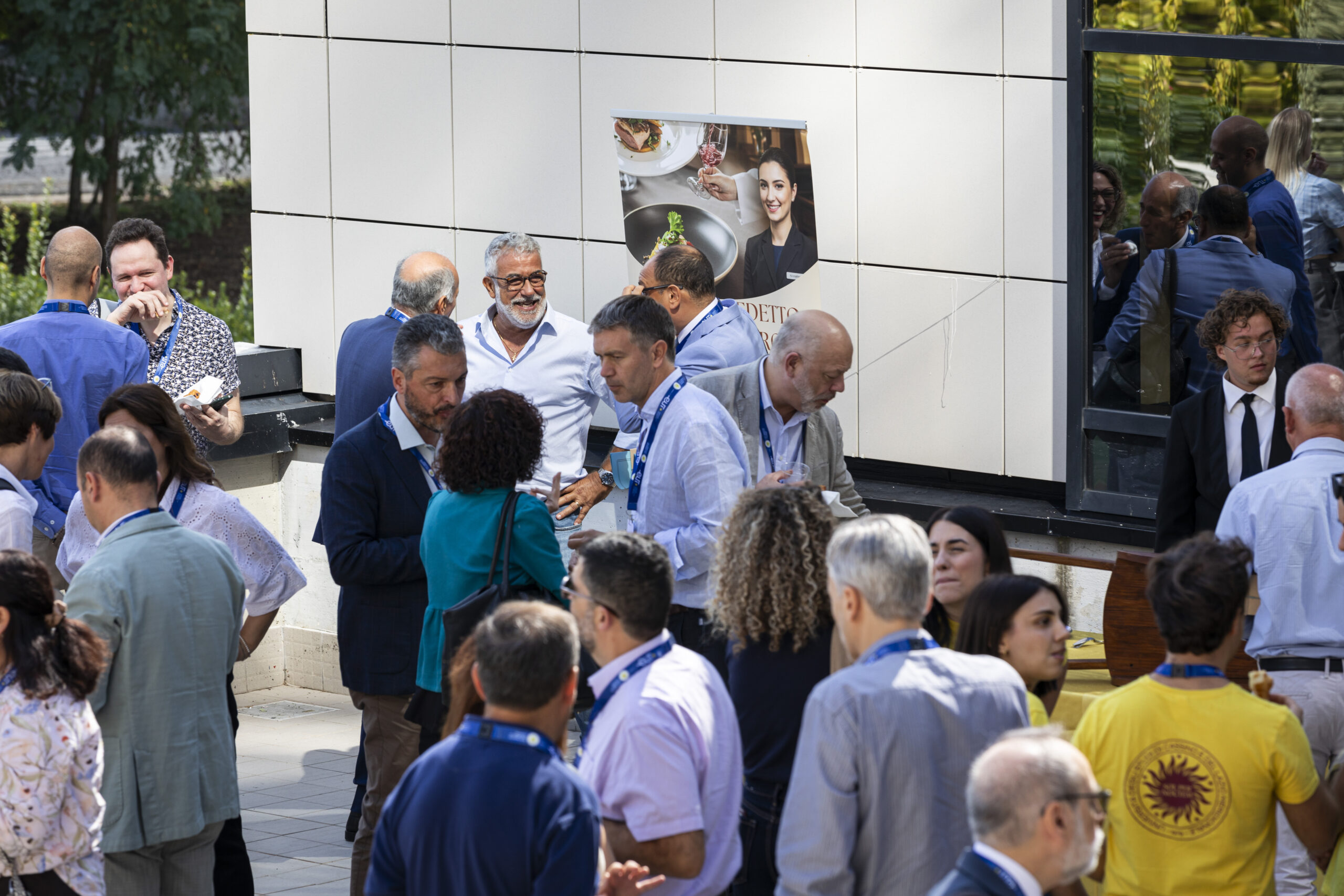
EUt Week a Unicas, alcuni partecipanti ai lavori
Since 1989, the European Union has funded Erasmus+, its most renowned international mobility programme. How does EUt+ differ from traditional Erasmus+ mobility, and what concrete advantages does it offer to a student pursuing an EUt+ academic pathway?
Erasmus is one of the great European successes. Considering its cost, its social, cultural and political impact has been extraordinary. But after more than thirty years, we now have to move to the next stage.
Traditional mobility is still often a carefully organised exception: a student decides to spend a semester abroad, prepares the application, checks recognition arrangements, finds accommodation, adapts the curriculum and so on. And although access has broadened considerably, students who are confident, mobile and academically successful still find it easier to take that step.
In EUt+, we want to reverse that logic. “Mobility should become routine for the institution, while remaining one of the most transformative experiences in a student’s education.”
Going to another European campus for a semester should eventually be almost as straightforward administratively as registering for the next semester at home. Credits will be recognised naturally. Curricula should be sufficiently interoperable. And students should spend their everyday academic life alongside colleagues from other European countries, so that mobility no longer feels like stepping outside the system.
The aim is not to make mobility less exciting. Quite the opposite. It should remain one of the most transformative experiences we can offer a young person. We simply want to remove the institutional obstacles that still make mobility feel like a special case rather than a normal part of university life.
And even seamless semester mobility is only an intermediate step. Ultimately, Europe itself should become part of the learning environment: programmes taught across several campuses, multilingual experiences, different academic cultures, and eventually a genuinely European qualification.
In other words, mobility should cease to be an interruption in a student’s education and become part of what European education normally is.
Il Rettore di Unicas, Marco Dell’Isola, durante al EUt+ Week
One of the core topics driving EUt+’s work is the European Degree, which remains a novel concept to many. Currently, EUt+ students can earn an EUt+ Certificate alongside their national degree upon meeting specific criteria, a document certifying their international mobility experience. EUt+ is thus paving the way for the European credential while actively working on the ambitious European Degree in Engineering project. What added value will the European Degree offer to students at Unicas students from EUt+ member institutions? And how is its implementation currently taking shape?
Let us take a very simple example. A student graduating from Cassino does not receive a “Lazio degree” that then has to be recognised in Lombardy. A student graduating in Milan does not receive a “Lombard degree”. Both receive an Italian degree.
So we should at least ask the next question: in an economy, a labour market and a society that increasingly operates at a European scale, why should the degree be Italian or Spanish and not… European? Today, money and goods can move across Europe more easily than qualified people and their credentials.
The European Degree is an attempt to change that. The ambition is not simply to create another certificate saying that a national degree is recognised abroad. It is much more interesting: to create a qualification that genuinely belongs to several European higher-education systems, a degree of several countries rather than merely a degree from one country accepted by the others.
There is an intuitive comparison with the euro. An Italian euro is not foreign currency when you arrive in France or Spain. The European Degree asks whether, one day, a qualification could acquire something of the same European character.
Through the Proceed project EUt+ is now working with other European alliances, universities, quality-assurance agencies and public authorities to make this concrete in engineering. Some countries already have legal mechanisms that can support such an approach; in others, the framework still has to evolve.
We therefore proceed step by step. And there is one principle on which we should never compromise: the student must always be protected. A new European instrument should never give students less recognition, fewer rights or less certainty than the systems they already have. It must give them more.
If we succeed, institutions such as UNICAS will not simply have observed the emergence of a new European qualification. They will have helped invent it.
That matters for students, but also for Europe itself. A credible European Degree would be a powerful instrument of academic attractiveness and European soft power.
The alliance connects nine universities across vastly different cultural contexts, from France and Latvia to Bulgaria and Italy. How do you build a single European University of Technology without eroding the cultural identity and deep territorial connections of each individual campus?
I would almost reverse the question. The greatest risk to our local identities may not come from becoming more European. It may come from failing to act together while globalisation proceeds without us.
We all carry remarkably similar smartphones. The technologies, platforms and industrial ecosystems that increasingly structure our lives are very often designed in Korea or in USA and made in China. The same is true in artificial intelligence and in many other strategic technologies. We may regulate these developments (and regulation matters) but ultimately the future is shaped by those who research, create, design and produce.
If European universities, industries and societies remain fragmented, our regions do not automatically become more independent or more distinctive. We may simply lose more of our capacity to shape the world around them.
This is why the European scale matters. Europe is not an additional identity intended to erase the others; it is increasingly the scale at which our existing identities can remain capable of acting.
And one of the fundamental European values we are trying to defend is precisely diversity: linguistic diversity, cultural diversity, different intellectual traditions and strong regional identities. Uniformity would actually be a failure of the European project.
For EUt+, territorial anchoring is therefore essential. A student may enter UNICAS simply because Cassino is close to home, without any particular interest in European mobility. But that student can suddenly find European students in the classroom, professors from other campuses, opportunities elsewhere in the alliance and several languages around them. Europe comes to the student before the student decides to go to Europe.
Then, perhaps, that student goes abroad.
When they return, they are not less Italian, less connected to Lazio or less attached to their home town. They simply understand from experience that another European culture is not an abstraction and that our differences coexist with a very substantial common ground.
This has a social dimension: European opportunities must be opened to the broadest possible range of students, not only to those who are already internationally oriented.
It has an economic dimension: Europe needs more highly qualified people, particularly in technology, who are able and willing to move, work and cooperate across borders.
And it is also a question of sovereignty and cohesion. Europe faces growing pressure from outside, but it can also weaken from within if too many citizens come to feel that the European project has little to offer them. Nationalist forces feed precisely on that sense of distance and exclusion. If Europe is to remain strong and united, the European project must become something that people can actually experience and benefit from in their own lives.
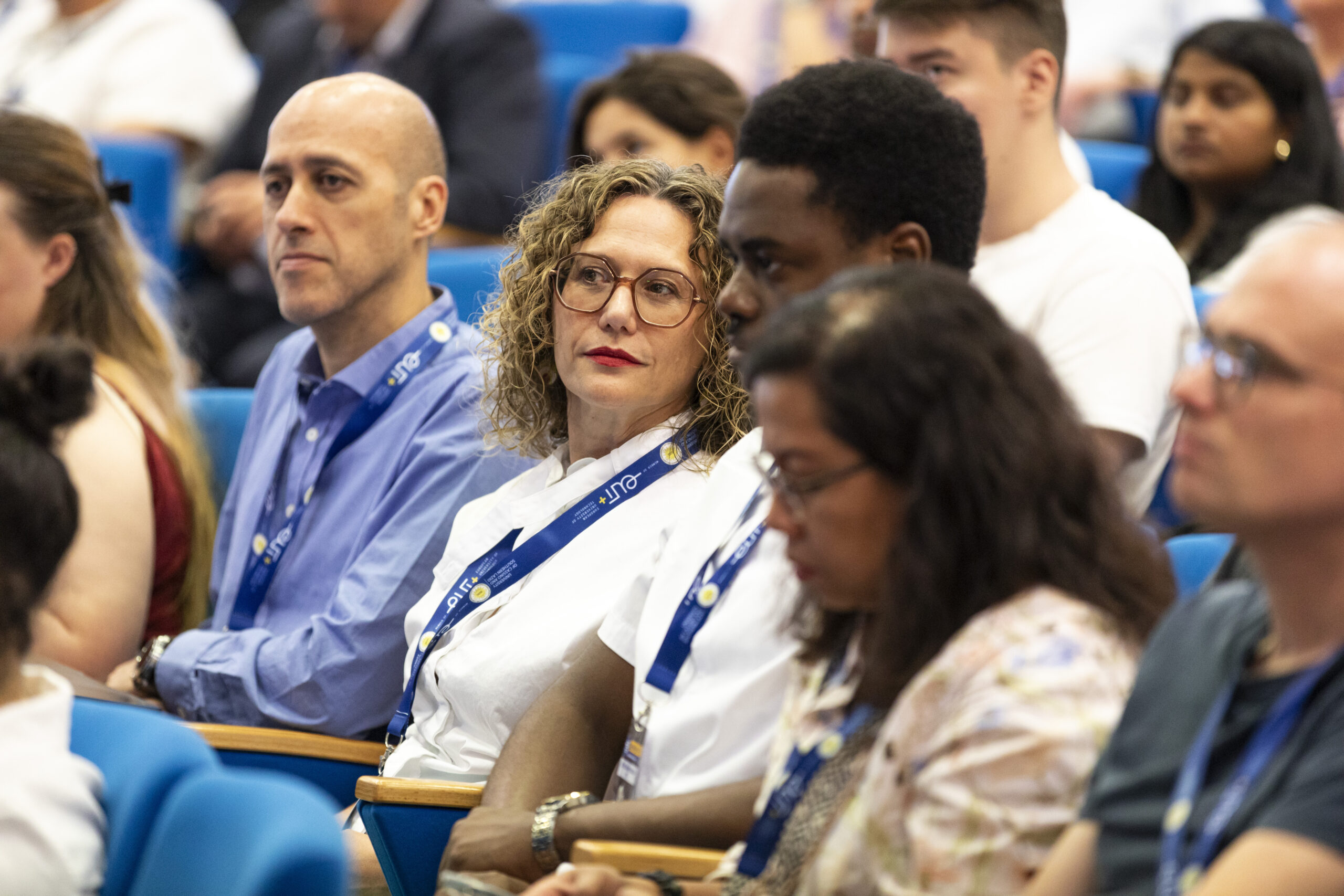
Un momento della EUt+ Week a Cassino
In the context of innovation and the ‘third mission’ of European higher education, EUt+ has launched several initiatives to foster student entrepreneurship, notably the Entrepreneurship School. The School delivers certifications based on the European EntreComp framework and includes the Incubation Program, a startup incubator that has engaged hundreds of students from nine institutions in mentorship pathways and masterclasses on business, marketing, and innovation, challenging themselves across diverse linguistic, cultural, and academic backgrounds. Why can these initiatives make a significant difference in a student’s career, and why does EUt+ prioritize promoting entrepreneurial skills?
Entrepreneurship is valuable far beyond the relatively small number of students who will eventually create a company.
Engineers, in particular, are very good at solving well-defined problems. Entrepreneurship teaches something slightly different: how to identify the right problem in the first place, how to act when the problem is imperfectly defined, how to convince others, and how to understand the economic, legal, cultural and human constraints surrounding a technically excellent idea.
You can design perfect technology and still fail because you ignored one legal issue, misunderstood your users or were unable to explain why anyone should adopt it.
This is also exactly the kind of education that gains enormously from being European. When someone from another culture looks at your project and asks a question you had never even considered, that can be extraordinarily educational. You discover that what seemed obvious to you was not obvious at all. You learn to step outside your own intellectual framework, defend an idea, change it when necessary and recognise that people can approach the same problem very differently and still produce equally strong, sometimes stronger, solutions. That cannot really be learnt from a textbook. At some point, you have to leave familiar surroundings, work with people who do not think exactly as you do and experience the discomfort, and the productivity, of difference. This is also why multilingualism matters. A lingua franca is efficient, but languages are not simply interchangeable codes carrying identical ideas. They also carry habits of thought, cultural references and different ways of framing problems.
So linguistic and cultural diversity is not merely something pleasant to preserve. It can improve the robustness of the way we think, design and innovate.
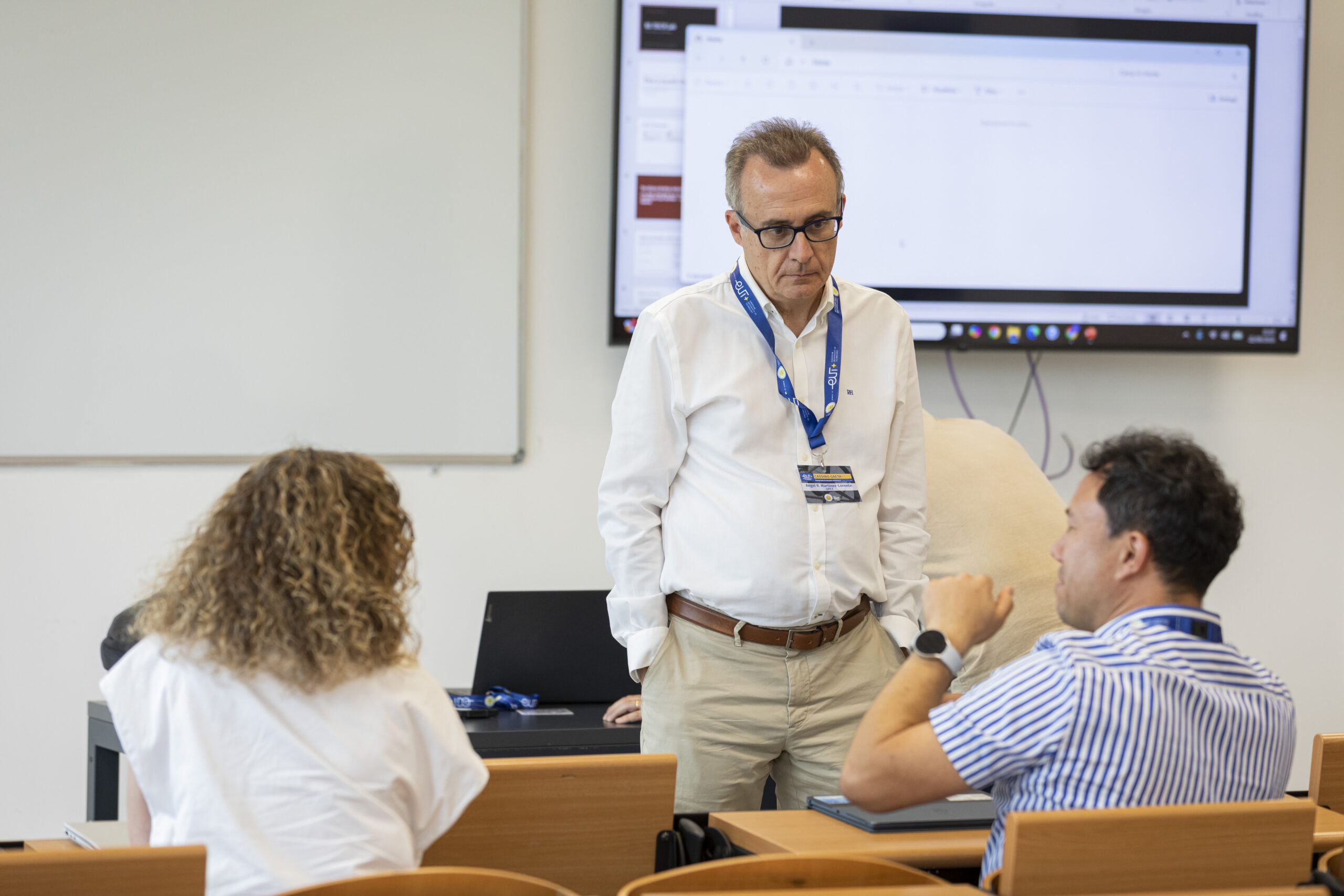
Una sessione di lavoro di EUt+ Week al Castello di Gaeta
Unicas is hosting the EUt+ Week for the second time across the Cassino Campus and the Angevin Castle in Gaeta. What key milestones and decisions does EUt+ expect to consolidate by the end of these working sessions?
At our current stage of development, the most important progress is not always marked by a spectacular decision or a new declaration. There comes a point in a project like EUt+ when you have to do the hard, detailed work. During the first years, a great deal of our energy quite naturally went into imagining what a European University of Technology could be: designing structures, defining objectives, exploring what might become possible.
We are now progressively entering a different phase. Our academic clusters are working concretely on the harmonisation and interoperability of programmes. Research groups and institutes are building common scientific agendas, developing joint doctoral supervision and bringing European projects back into the alliance. Administrative colleagues are solving the practical problems that arise when nine universities increasingly work as one system.
That work is less spectacular from the outside, but it is where an alliance becomes real.
And in fact, there is no opposition between imagining EUt+ and building it. At this stage, we increasingly imagine the university by building it.
We have to ground our dreams sufficiently for them to become achievable, but also sufficiently for them to remain exciting and continue generating new ideas. Ambition without implementation eventually becomes rhetoric; implementation without ambition becomes administration. We need both.
A very concrete symbol of this change is our common scientific affiliation, “European University of Technology, European Union.” By the time these lines are published, we expect to have passed the threshold of 500 research publications [Ed. note: threshold exceeded on September 25, 2026] carrying that affiliation.
The number itself is not what matters most. Researchers are among the people least inclined to change an affiliation merely because someone asks them to. Using it expresses a genuine sense of belonging: they are simultaneously researchers of UNICAS, UTT, TU Sofia or another member university, and researchers of the European University of Technology.
That is an important sign of maturity. The alliance is no longer only something described in strategic documents. Increasingly, it exists in the everyday academic work of the people who make the university.
Looking ahead at the EUt+ alliance ten years from now, what is the most significant change you hope to leave as a legacy for the European higher education system and the professionals we are training today?
A little more than a century ago, all European societies made an immense collective effort to make primary education broadly accessible and compulsory.
For many families, that effort was very concrete. Sending children to school meant losing help on the farm or in the workshop, finding proper clothes for them, and accepting an immediate cost in exchange for a future benefit that was not always obvious.
But teaching entire populations to read, write and count profoundly transformed our societies. It opened access to knowledge, to further education, to skilled employment and, ultimately, to much broader social advancement.
Our ancestors did not have to abandon where they came from in order to give their children a larger horizon. I think our generation faces a different challenge of comparable importance. This is not simply the next stage of nation-building, and Europe should not be understood as a larger nation replacing smaller ones. The European dimension is something different.
But we now have to give young people the capacity to live, learn and work in the space in which much of their twenty-first-century future will actually unfold.
If, in ten years, European mobility, multilingualism and a genuinely European qualification have become normal opportunities for a broad majority of our students rather than distinctive opportunities for a privileged minority, EUt+ will have made a very substantial contribution.
Because the alternative matters too. If international mobility and multilingualism remain disproportionately accessible to those who already possess the social, cultural and economic confidence to seek them out, Europe risks becoming a lived reality for some and a distant abstraction for others.
That would be a social failure, and ultimately a problem for the cohesion of the continent.
There is also an external dimension. A strong European Degree, backed by demanding academic standards and a recognisable European educational model, would be highly attractive well beyond Europe.
That is soft power in its most constructive form: not imposing European values, but building institutions and opportunities that make people want to engage with them.
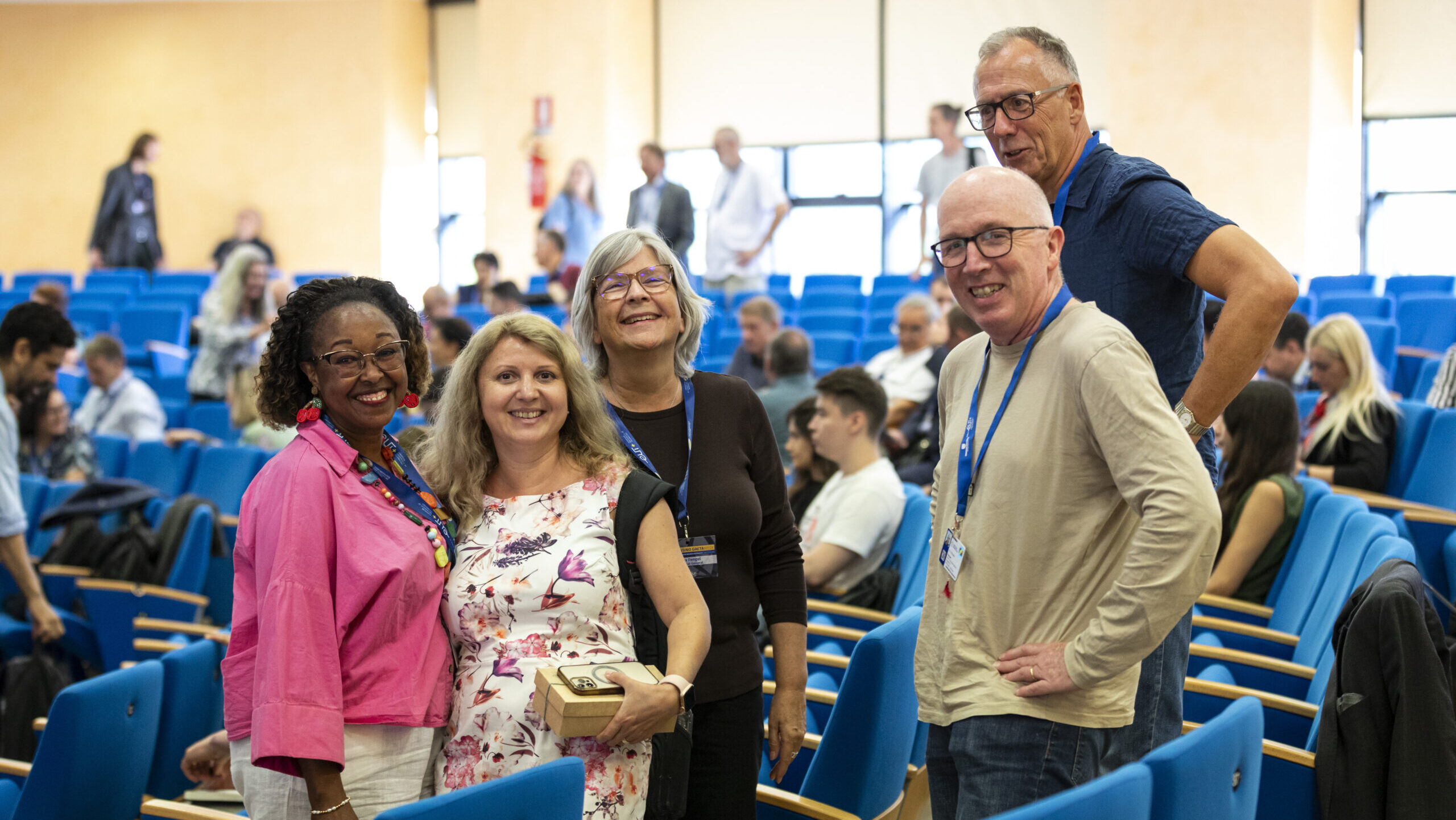
Il gruppo dei partecipanti a EUt+ Week di Cassino
The ambition, ultimately, is not simply to build a European university. It is to help make Europe a normal horizon of possibility for every student who enters one of our universities.
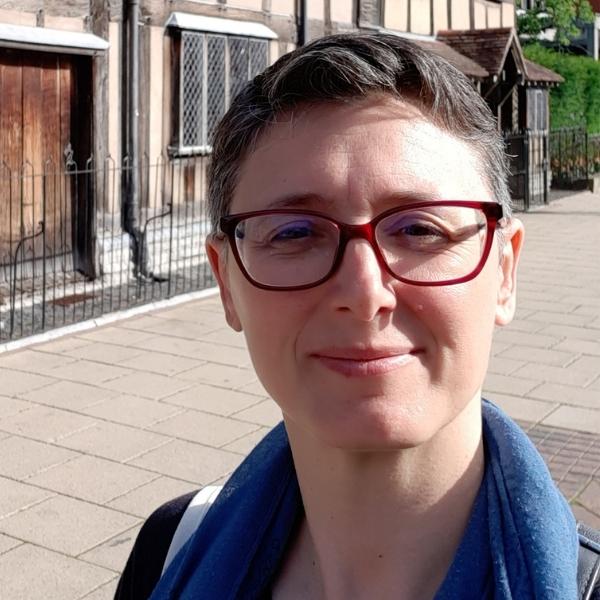
Angela Vallone (Cassino, 1978) è membro della redazione del web magazine Unicas+ e presta servizio presso la Segreteria EUt+ dell\'Università degli Studi di Cassino e del Lazio Meridionale.
Laureata con lode in Lingue e Letterature Straniere presso UNICAS , ha conseguito un Master of Arts in Bilingual Translation alla University of Westminster di Londra nel 2003. Ha successivamente lavorato per quasi 20 anni come traduttrice, interprete e consulente per la comunicazione freelance, collaborando con brand internazionali e istituzioni accademiche nei settori del marketing, del turismo e della saggistica scientifica.
In quanto membro del gruppo di lavoro dell\'alleanza europea EUt+ (European University of Technology), si occupa del supporto al project management, della gestione della sezione web UNICAS dedicata all’alleanza e delle attività di comunicazione EUt+ presso UNICAS.
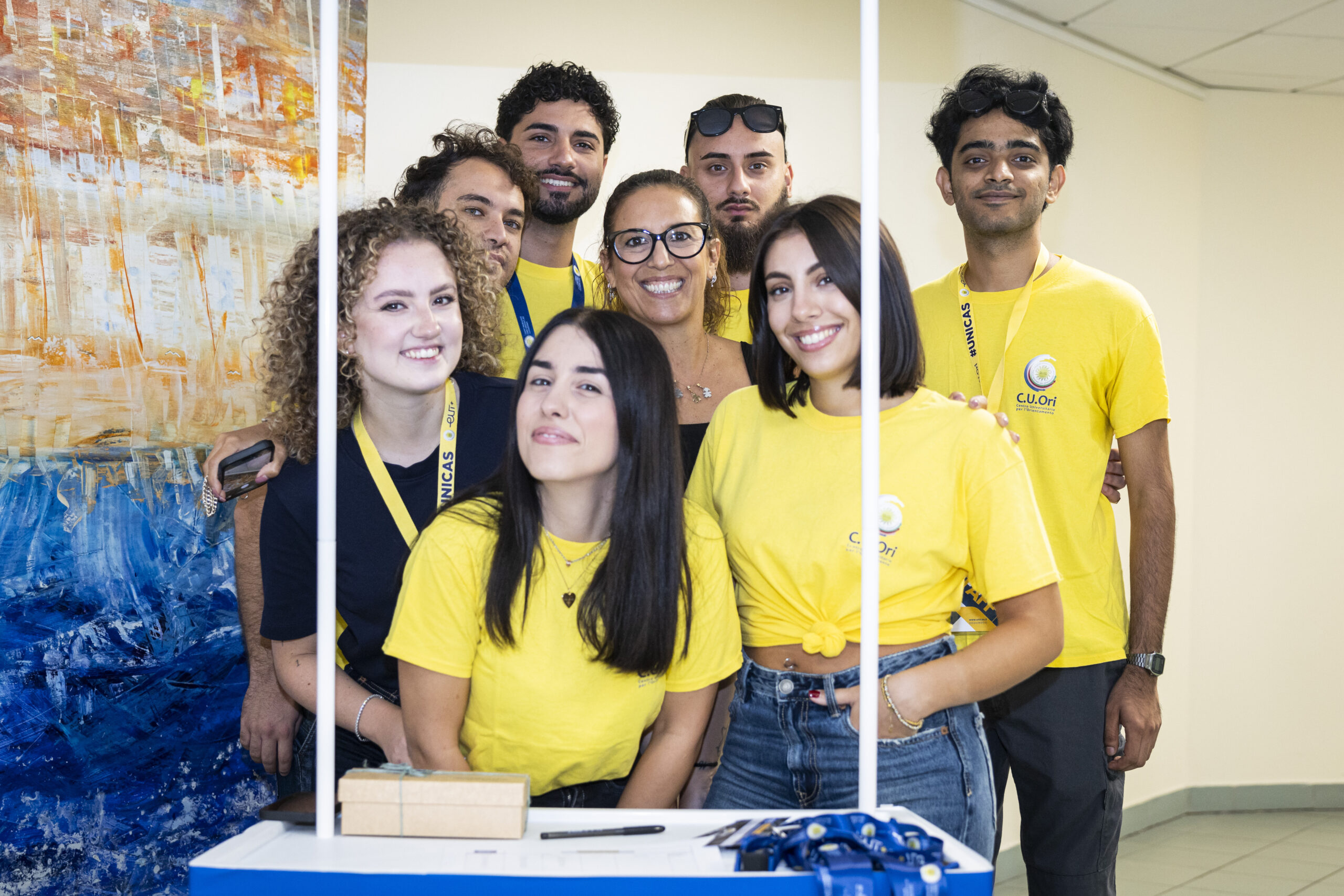
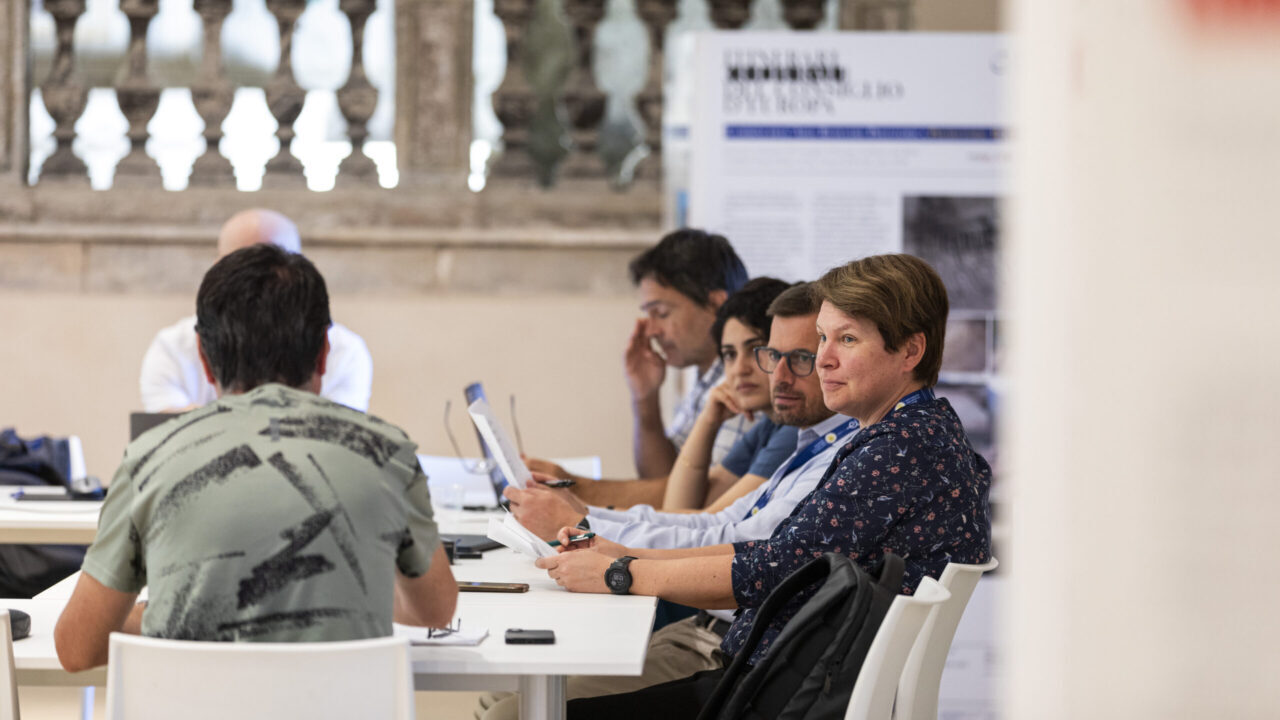 Un momento della EUt+ Week a Cassino
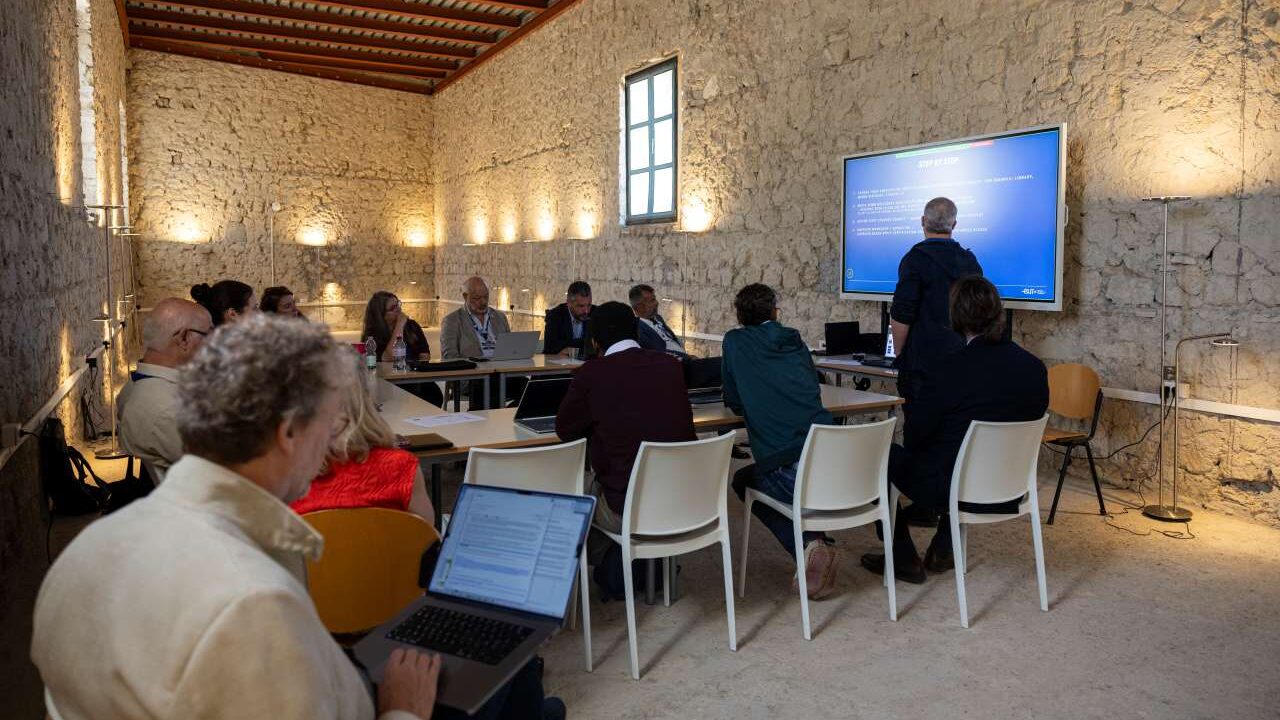 Una sessione di lavoro di EUt+ Week al Castello di Gaeta
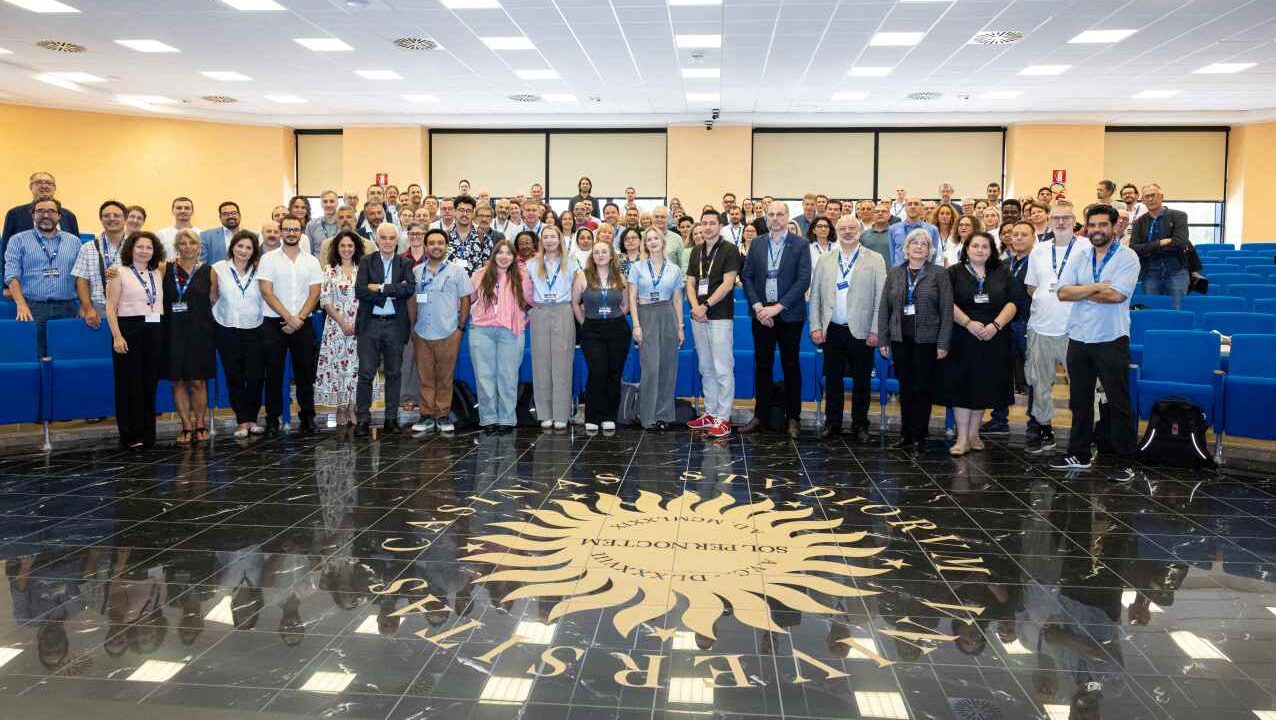 Il gruppo dei partecipanti a EUt+ Week di Cassino